If you are visiting our site for the first time, we hope it reflects the life of this parish and draws you deeper into your relationship with Christ through our community. If you are a parishioner, you will find what you need here to grow more involved in our family of faith.
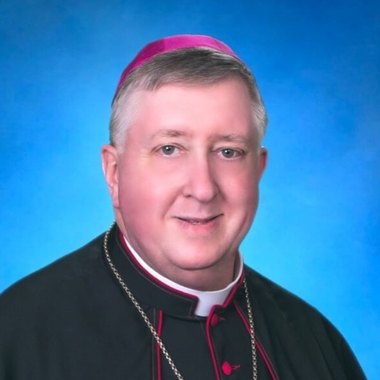
The Most Reverend Mitchell Thomas Rozanski was ordained a priest of the Archdiocese of Baltimore at the Cathedral of Mary Our Queen on November 24, 1984. He served as an associate pastor at St. Michael, Overlea in 1984 and then the Cathedral of Mary Our Queen. He was appointed associate pastor at St. Anthony of Padua, Baltimore in 1985 and St. Isaac Jogues, Baltimore in 1990. He was appointed administrator of Holy Cross and St. Mary Star of the Sea parishes in Baltimore in March 1993, before being appointed pastor there in October. In January 2000 he was appointed temporary administrator of Immaculate Conception, Towson and in June assumed the same duties at St. John before being named its pastor on November 28, 2000.
On July 3, 2004 he was named by Pope John Paul II as auxiliary Bishop for the Archdiocese of Baltimore and was ordained on August 24, 2004 at the Cathedral of Mary Our Queen. Upon his ordination as bishop he was named vicar general and episcopal vicar for the Seton Vicariate of the Archdiocese.
Bishop Rozanski has served as bishop for the Diocese of Springfield, a position he was appointed to on June 19, 2014 by Pope Francis. He was installed on August 12, 2014, by Cardinal Sean O’Malley, OFM Cap.
On June 10, 2020 Pope Francis named him as the 10th archbishop for the Archdiocese of St. Louis, Missouri. Archbishop Rozanski celebrated his installation Mass on August 25, 2020.
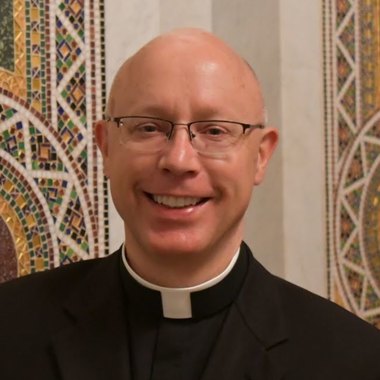
Monsignor Henry Breier was ordained a priest of the Archdiocese of St. Louis at the Cathedral Basilica by then-Archbishop Justin Rigali on May 28, 1994. After serving three years as an associate pastor of Queen of All Saints Parish, he was appointed to be the Secretary of the Archbishop, where he served for 12 years. In 2009, Monsignor Breier was appointed as pastor of Saint Raphael the Archangel parish and Queen of All Saints Parish in 2015. On June 28, 2019 Monsignor Breier was appointed Rector of the Cathedral Basilica. He holds Masters of Divinity and Masters of Management degrees and enjoys cycling in his free time.
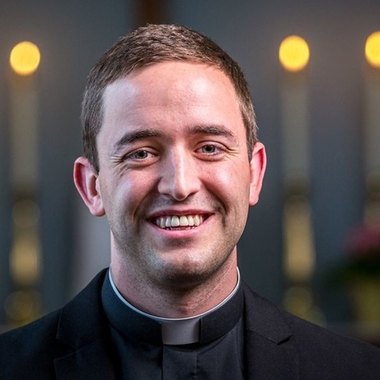
A native son of our Archdiocese, Father Archer was born and raised in St. Margaret Mary Alacoque Parish in south St. Louis County. He attended St. Louis University High School and the University of Dallas, and in 2016 responded to God’s call by entering Kenrick-Glennon Seminary. He was ordained to the priesthood on May 19, 2021, along with five classmates, and recently completed his first assignment as Associate Pastor at St. Peter’s in Kirkwood.
Find your place in parish life through one of our ministries below.
Singers and instrumentalists wishing to join the Cathedral Choir, the Cathedral Instrumentalists, or the Archdiocesan Choirs should contact the Cathedral Music Office at 314-373-8227 or email music@cathedralstl.org for more information and to schedule an audition/interview.
Lectors not only proclaim the Word of God, but they also communicate their own faith in that Word. The Cathedral parish needs nearly 20 Communion Ministers each weekend to share the Body and Blood of Christ with their fellow worshippers at liturgies.
To join or learn more, contact the parish office at 314-373-8202 or email laurav@cathedralstl.org.
Altar servers assist at Masses on weekends and special occasions such as weddings and funerals. Open to adults and children in 5th grade and older.
For more information, contact Fr. Zac Povis at 314-373-8204 or zacharypovis@archstl.org.
Ushers and greeters exercise the ministry of hospitality of the Parish. Duties include welcoming the faithful, handing out weekly bulletins and worship sheets, answering questions, and gathering the gifts.
For additional information, please contact Mary Ann Fox, Event Manager, at 314-373-8208 or maryannf@cathedralstl.org.
Married and single adults in their 20’s and 30’s interested in growing the fellowship of our young adult community are invited to meet for dinner, prayer, and activities.
For more information, email AnimaChristiStL@gmail.com.
A monthly program of Adoration and Dinner for all men, parishioners and guests of any age. Held on the fourth Tuesday of each month, enjoy the fellowship of other Catholic men seeking religious fulfillment.
For more information, contact Msgr. Henry Breier at 314-373-8206 or breier@cathedralstl.org.
Women of the parish and its visitors meet on the third Wednesday of the month for Adoration in the Blessed Mother Chapel, followed by meetings, fellowship and dessert in Boland Hall.
For more information, contact Msgr. Greg Mikesch at 314-373-8207 or mikesch@cathedralstl.org.
Members devote themselves to prayer and ministry by visiting shut-ins, contacting active and inactive Catholics, and new parishioners. They provide information about the faith to non-Catholics. Auxiliary members support active members through prayer.
For information, contact the parish office at 314-373-8202 or laurav@cathedralstl.org.
Members of the Cathedral St. Vincent de Paul Society are committed to aiding fellow parishioners and neighbors with necessities such as food, clothing, utilities, and rent — all in the context of the Christian imperative.
For more information, leave a message on the SVDP HotLine at 314-373-8288.
Casseroles and other offerings are collected for delivery to St. Patrick Center on the second Friday of each month. This provides one week of dinners for the Women’s Shelter, and one night of dinners for the Men’s Alumni Club.
For more information, email Skip & Nicki Batchelor at batchelorn@hotmail.com.
This landscaping ministry is for those who like working outside and want to help maintain the parish grounds.
For additional information, please contact the parish office at 314-373-8202 or laurav@cathedralstl.org.
The Cathedral hosts approximately 275,000 tourists and visitors annually. Volunteers staff the Gift Shop and Museum, as well as provide guided tours. Training is provided.
For more information, contact Susie Irons at 314-373-8205 or sirons@cathedralstl.org.
Sign up for Flocknote to get parish news, Mass updates, and ministry announcements sent to your inbox or phone. Missed an update? Browse past bulletins online anytime.
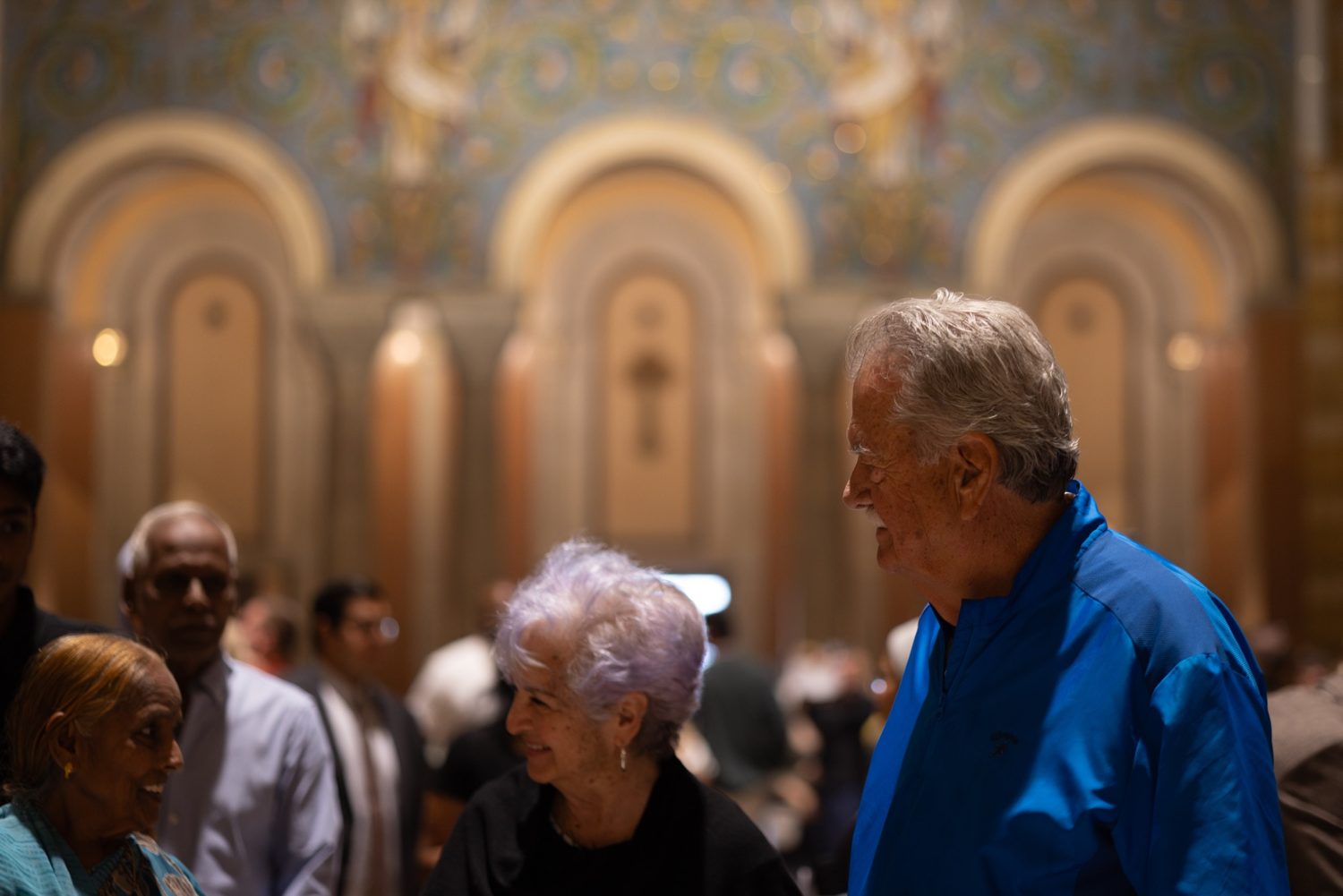
With God’s grace, the Cathedral Basilica Parish endeavors to nourish the spiritual life of its parishioners, neighbors, and visitors. As the liturgical heart of the Archdiocese of Saint Louis, the Cathedral Basilica gathers clergy, religious, and lay faithful for sacramental celebrations. We extend the hand of Christ to all who come to encounter His merciful love in this sacred house of worship.
Helping people encounter Christ.
Putting Christ in action.
Living the Gospel message.
Reaching those in need.
The community of Cathedral Basilica of St. Louis Parish professes to be a part of the much larger community, that is the one, holy, catholic and apostolic Church.
By virtue of our faith, we are united as members of the Body of Christ with brothers and sisters around the world — both on earth and in heaven. As Catholics, we accept Jesus’ commission to “Go therefore and make disciples of all nations.” (Mt 28:19). Our mission as a parish community is to meet Christ here, to follow especially the example of the Blessed Virgin Mary in worshipping and adoring Him, and then to go out and bring Him to the world by what we say and do.
As Catholics, we are united with other Catholics around the world especially by the way we worship and what we believe. What follows is a brief summary of some of the fundamental aspects of our faith; of what we believe. In 1992, under the direction of Pope St. John Paul II, the Holy See promulgated the Catechism of the Catholic Church, which is given as a summary of the vast content of Catholic faith.
It is especially in the Catechism that the most precise and accurate statements of our belief can be found. As Pope St. John Paul II himself said, “The Catechism of the Catholic Church … is a statement of the Church’s faith and of catholic doctrine, attested to or illumined by Sacred Scripture, the Apostolic Tradition, and the Church’s Magisterium. I declare it to be a sure norm for teaching the faith and thus a valid and legitimate instrument for ecclesial communion.” (Fidei Depositum). References below designated with a “CCC” refer to paragraph numbers in the Catechism of the Catholic Church.
We believe that God is the almighty Principle and Creator of all that exists. God not only has created all things, but also, at each instant, holds all things in existence. Everything in the created world depends utterly upon the free choice of God for its existence. We believe that the existence of God is something which is knowable from natural reason and science: God’s existence can be proven. (CCC 31–35)
We believe that this same God who freely created all things has revealed in history His particular love for human beings. God has revealed Himself in a variety of ways throughout human history. He has revealed certain truths about Himself, about His love for the created world, particularly human beings, and about His providential plan. (CCC 50–53)
One of the things which we believe that God has revealed about Himself is that He exists as a Trinity of three divine Persons. This is NOT to say that there are three distinct gods or that there are merely three modes according to which the same god reveals himself. Rather, we believe that the same God exists as Father, Son and Holy Spirit: three Persons all of whom are identical to the same, numerically singular divine nature. All three Persons are fully and equally God. (CCC 253–256)
This is one of the central Mysteries of our faith. God’s nature so profoundly transcends our own, that we are not fully able to comprehend Him. Therefore, we do not comprehensively grasp what exactly it means for God to be three Persons in one nature. However, we believe that it is so because God has revealed it.
In the “fullness of time” we believe that the Son — the second Person of the Blessed Trinity — assumed the nature of a human being and walked the earth as the Person Jesus Christ. We believe that Jesus Christ is thus fully human and fully divine. Whereas the Trinity may be described as three Persons in one nature, Jesus Christ may be described as one Person with two natures: human and divine. (CCC 464–469)
Jesus Christ is a real, historical Person who walked the earth nearly 2000 years ago and died upon the Cross. As Catholics, we believe that He was no mere human being. Rather, we believe that Jesus Christ is truly the God of the universe and that He willed to assume a human nature in order to redeem and save us.
The Incarnation, or the act of God’s taking on a human nature and “becoming man” in the womb of the Blessed Virgin Mary, is the second central Mystery of our faith. Though we may not fully comprehend how it is that Jesus Christ is fully God and fully human, we believe that Jesus is telling the truth when He tells us that it is so. (CCC 470)
We believe that after three days in the tomb, Jesus Christ rose from the dead and walked the earth again for a period of 40 days. While God cannot die, Jesus did truly die in His human nature — His Body did truly separate from His Soul — but that He rose again from the dead after three days. (CCC 627) Over 500 people saw and spoke with Jesus after His Resurrection and were taught by Him, and their testimony has been handed down through the ages in the forms of Sacred Scripture and Sacred Tradition. (CCC 641–644)
The Resurrection is the definitive proof of Jesus’ divinity: it is because He rose from the dead that we believe Him when He claims to be God. Because He is God, we believe everything else He has said to be trustworthy as well, including His claim that we too shall rise from the dead at the end of time. Jesus’ Resurrection sets the stage for our own resurrection. (CCC 988–1004)
“And I tell you, you are Peter, and upon this rock I will build my Church, and the gates of hell shall not prevail against it.” (Mt 16:18)
We believe that before Jesus ascended into heaven, He formed the community of those who believe in Him into a church, defined especially by common belief (creed) and liturgical practice (worship). (CCC 763–766) Jesus Christ established His Church as the privileged vehicle through which He continues to communicate to the human race His gifts of grace and truth. (CCC 824) He promised that His Church would be safeguarded until the end of time by the power of the Holy Spirit, so we can trust that the Church’s Sacraments truly do communicate to us God’s gift of grace and that the teaching of the Church faithfully and accurately represents the truth about God and His will for human beings. (CCC 737–741)
We believe that the fullness of what Christ intended for His Church is to be found in the Catholic Church. While it is certainly true that individual members of the Church are very much capable of error, the authoritative, dogmatic teaching of the Catholic Church as a whole is understood to be the definitive and correct understanding of the faith handed on by Christ and the Apostles. (CCC 888–892)
The Bible (also called Sacred Scripture) is a collection of ancient texts compiled by the early Church which we believe to be divinely inspired. That is to say that the books of the Bible (46 books of the Old Testament and 27 books of the New Testament) were written by human authors under the inspiration of God Himself. So while the books of the Bible are authored by particular people living in particular times and contexts, it is also in a mysterious way authored by God. (CCC 105–108) Because they are authored by God who is not bound by time or place, they do very much cohere as one book which we call the Bible. (CCC 128–130)
The Bible contains a whole variety of literary genres. While much of it is, in fact, historical (particularly the New Testament), the books of the Bible also contain ancient poetry, prophetic literature, apocalyptic literature and metaphorical language. (CCC 115–119) In order to correctly understand the intention of the Bible’s human and divine authors, it is meant to be read within the living Tradition of the whole Church. (CCC 80–84) “Sacred Scripture must be read and interpreted in light of the same Spirit by whom it was written.” (Dei Verbum 12.3)
The Creed is the most concise form of our belief as Catholics. From the time of the Apostles, members of the Church have handed on the faith in these concise formulae. The two principal forms of the Creed are The Apostles’ Creed, which is so called because it is a summary of the faith of the first Apostles, and the Nicene Creed, which is a bit longer and is derived from the first two ecumenical Councils of the Church (Council of Nicaea in 325 and Council of Constantinople I in 381). (CCC 185–197)
Jesus built His Church upon the “rock of St. Peter.” He charged Peter with headship over His Church and to be a visible sign of the Church’s unity after His Ascension into heaven. We see from the earliest years of the Church’s existence that Peter and his successors are recognized as having a particular kind of authority when it comes to faithfully transmitting the teaching of Jesus Himself. In the book of Acts of the Apostles, for example, we find Peter leading the first council of the Church in Jerusalem and issuing the first of the Church’s dogmatic decisions. Peter is the “Vicar of Christ.” (CCC 880–883)
We believe that this authority which is given to St. Peter is also transmitted to his successors. Through the centuries of history, from the time of St. Peter himself to our own day, there has been an unbroken line of successors of St. Peter whom we refer to as the Pope. The Pope is the successor to St. Peter, the “Holy Father,” the Bishop of Rome and the Vicar of Christ. (CCC 861–862)
The teaching of the Holy Father enjoys the character of “infallibility,” or incapable of being wrong, only when he speaks “ex cathedra,” or with the full authority of his office. Not every statement of a pope is infallible. Only formal declarations made with the full weight and authority of his office in communion with the other bishops are considered to be infallible. (CCC 891–892)
In addition to St. Peter, Jesus entrusted a certain role and authority to His other eleven Apostles. If St. Peter was the first pope, the other eleven Apostles were the first bishops. (CCC 883–887) Together with the Pope, the bishops constitute what is called the Magisterium, or teaching office of the Church. Like the Apostles, the bishops are entrusted with governance of the Church. Each bishop is assigned to a particular region of the Church called a diocese or archdiocese. The bishop of an archdiocese is called an archbishop. (CCC 832–834)
Priests serve as co-workers with the bishops in their role of teaching, sanctifying and governing the Church. By the Sacrament of Holy Orders, they also receive a permanent mark on their soul which conforms them to Christ and allows Him to act through them in a particular way. Priests act “in persona Christi,” or “in the Person of Christ.” By virtue of their ordination, priests become mediators between God and human beings: offering prayers to God on behalf of His people, and dispensing to people the gift of saving grace which comes from God. (CCC 1562–1568)
Deacons also receive the Sacrament of Holy Orders and so also receive a mark on their soul which conforms them to Christ in a particular way. By their ordination, they are consecrated to assist the priests and bishops especially in helping with the administration of certain Sacraments and in teaching the faith through preaching. (CCC 1569–1571)
A Catholic Sacrament is traditionally defined as “an efficacious sign of grace instituted by Christ.” This means that while the Sacraments are ritual actions which signify grace, they also actually cause that which they signify. The recipient of a Sacrament is actually changed: they receive God’s gift of grace by receiving the Sacrament. The Sacraments are the privileged vehicles through which God communicates to us the grace which we need in order to grow in holiness and ultimately enter eternal life. (CCC 1127–1130)
We believe that Jesus Christ instituted seven Sacraments to be celebrated by His ministers through the centuries. The seven Sacraments are Baptism, Confirmation, Holy Eucharist, Confession (also called Penance or Reconciliation), Anointing of the Sick, Holy Matrimony and Holy Orders. (CCC 1113–1121)
We believe that God saves us by making us like Himself. To be holy is simply to be God-like. In order to make us like Himself, God bestows upon us, especially through the Sacraments, His gift of grace. God gives us to share in His own divine nature: He deifies, or divinizes us. We are truly transformed in the depths of our very being to become God’s sons and daughters and are thus prepared to spend eternal life with Him. This participating in the very life of God is what is meant by the word grace. (CCC 1996–2005)
It is only by grace that our actions can ever be pleasing to God. When we sin, we turn our back on God and thus cut ourselves off from the source of grace. (CCC 2008–2011) We can effectively destroy the supernatural life of grace within our souls when we commit sin. (CCC 1861) Gratefully, in His mercy, our Lord established the Sacrament of Reconciliation wherein those who have lost God’s gift of grace through sin may have it restored to them. (CCC 1856)
We believe that God created human beings with a spiritual soul which will live forever. When a person dies, their soul separates from their body and they pass from earthly life into eternal life. Whereas while we are on earth we live from moment to moment, eternal life takes place outside of time. (CCC 362–368) When we pass from this life into the next, we are fixed there for eternity. We will either eternally enjoy the reward and bliss of life with God, or eternally suffer the pain of life without Him. (CCC 1007, 1020)
Eternal life with God is what we mean by the word heaven. A person who dies in God’s grace — without the stain of mortal sin upon their soul — will enter heaven when their time on earth comes to an end. Those in heaven enjoy a happiness and a peace beyond anything that this earthly life could possibly offer. (CCC 1023–1029)
Eternal life without God is what we mean by the word hell. A person who dies in a state of rejection of God will enter hell. While God is good and always ready to forgive, He will not force His love upon us. He respects the free will with which we are created. The eternal pains of hell are the just result of the free decisions of those who choose to reject God’s love and mercy. (CCC 1033–1037)
The state of purgatory is a temporal state which many souls will enter in order to be purified of any attachments to sin they may have. Unlike heaven and hell, purgatory is not eternal: no one remains in purgatory forever. All souls who go to purgatory after they die will go to heaven when their time of purification is complete. (CCC 1030–1032) We can assist those in purgatory by the help of our prayers. “Therefore, he made atonement for the dead, that they might be delivered from their sin.” (2 Macc 12:45)
A saint is anyone who has attained the life of heaven. Any person who has lived a virtuous life on earth and has thus gone to their heavenly reward is a saint. We are all, thus, called to be saints. (CCC 2013–2014)
Certain individuals are recognized and declared to be saints by the Church through a process called canonization. When a person is canonized it simply means that the Church recognizes that person as having lived an exemplary life of holiness and who is now certainly in heaven. Certain saints are canonized in order that they might be held up as an example to all Christians and that we might ask for their intercession. (CCC 828)
We do not pray to saints in the way that we pray to God. We do not worship the saints. Rather, we honor them for their heroic virtue and, most importantly, we ask them to pray to God for us. They stand in the direct presence of God and thus are able to offer powerful prayers before the face of God when we ask them. (CCC 956)
We honor the Blessed Virgin Mary as the greatest of the saints. The Lord chose Mary to be the one through whom He would become incarnate. As the mother of Jesus — whom we believe to be truly man and truly God — we believe that Mary can truly be said to be the mother of God. (CCC 495)
By a particular gift of grace, we believe that Mary was preserved from the stain of original sin and never committed any personal sin through the course of her earthly life. Mary was given this grace not as a reward for any of her merits, but in order that she might be a fitting vessel to literally bear the God of the universe. (CCC 487–489)
As the greatest of all the saints, we believe that the prayers which Mary offers to God on our behalf are especially powerful. She is a most powerful intercessor and all Christians are invited by Jesus on the Cross to look at her and “Behold your mother.” (Jn 19:27)
Stream Catholic films, talks, ebooks, and programs for kids and adults, all free through our parish subscription.
Victims of sexual abuse, in addition to contacting civil authorities, are asked to come forward in order to receive pastoral assistance. Reports of abuse may be made to any Pastor or to the contacts below.
The Archdiocese’s Safe Environment Program requires all clergy and adult employees and volunteers who work with or near minors and/or vulnerable adults to attend a Protecting God’s Children workshop, view two online training modules, agree to the Code of Ethical Conduct for Clergy, Employees, and Volunteers Working in Ministry, and complete a national criminal record check.
Find the schedule for Protecting God’s Children workshops and compliance registration at preventandprotectstl.org.